Many RV owners choose quiet, clean electricity over campsite connections or noisy gas generators. A solar generator offers independence, but can it actually power your entire RV? The answer is determined by the amount of power consumed and the gadgets used on a daily basis. Some travellers merely require lighting and gadget charging. Others plan to use air conditioners and kitchen equipment. Before investing in a system, you should understand your power requirements and the generator's limitations. This book explains RV energy requirements, appliance loads, and system size so you can make an informed decision.
How Much Power Does Your RV Really Need?
Calculate Your RV Power Consumption
Start by determining your daily energy use in watt-hours. List every equipment you intend to use in your RV. Take note of each appliance's wattage and estimate how many hours you use it each day. Watts multiplied by hours equals watt-hours for each item. Then sum the totals. This figure indicates how much battery capacity you require every day. Check appliance labels or user manuals for precise wattage ratings. Don't guess. Precise calculations avoid undersized systems and power outages. When you understand your actual usage, you may select a solar generator that fits your travel style and energy habits.
Common RV Appliances and Their Power Requirements
Most RVs have a combination of low- and medium-powered electronics. LED lights typically take 5 to 15 watts apiece. A television may consume 60 to 150 watts. Laptops often demand 50 to 100 watts when charging. A 12V fridge has an average power consumption of 40 to 70 watts, but cycles on and off throughout the day. Microwaves typically require 800 to 1,200 watts to operate. Coffee machines and hair dryers may generate more than 1,000 watts. Knowing this data allows you to see which appliances use the most energy. Small gadgets are easy to sustain, but heating and culinary items require significantly more power.
Peak Load vs. Running Wattage: Why Surge Power Matters
Running watts is the constant electricity required by an appliance when it is in operation. Peak or surge wattage is the amount of power required when a gadget starts. Motors and compressors, such as those used in refrigerators and air conditioners, sometimes require two to three times their running wattage upon beginning. If your solar generator cannot withstand the surge, it may shut down or overheat. Before making a purchase, always check the continuous output and surge rating. Matching these values with your RV's maximum starter load assures consistent performance. Ignoring surge requirements causes dissatisfaction and inconsistent off-grid electricity.
Can a Solar Generator Run All RV Appliances?
What a Solar Generator Can Easily Power in an RV (Lights, TV, Laptops, Fans)
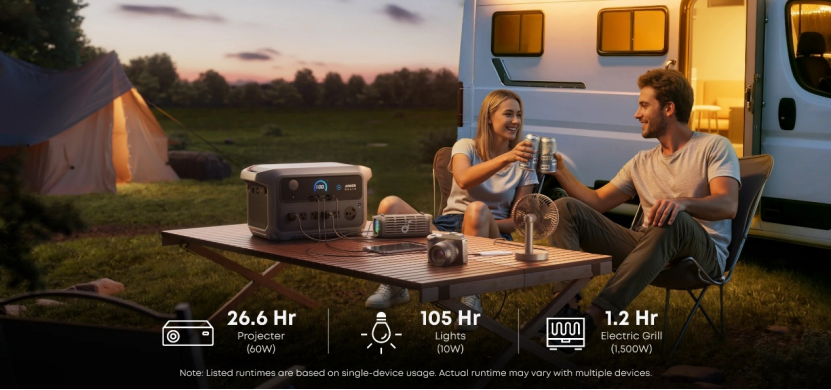
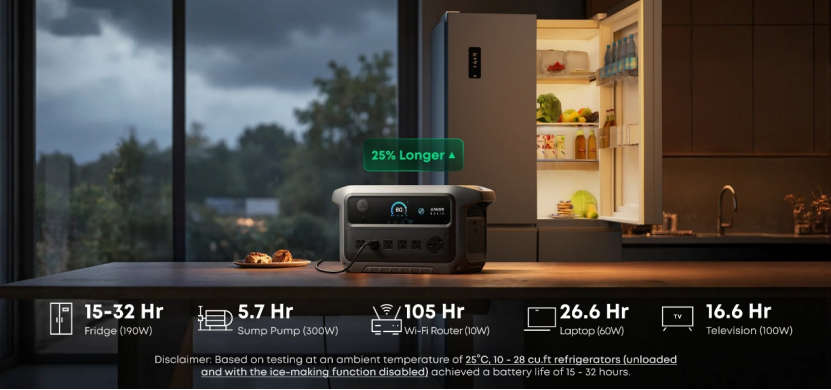
A mid-sized solar generator can readily power the majority of an RV's modest gadgets. LED lights, cellphones, tablets, and Wi-Fi routers consume less power. Laptops and televisions are also within acceptable limitations for many portable systems. When combined with sufficient battery capacity, fans and tiny 12V freezers usually work well. These daily needs necessitate moderate continuous output and tolerable energy storage. For weekend travels or casual usage, an appropriately sized device can provide comfort and connectivity without strain. If your power requirements remain within this range, solar generation is efficient and reliable on the road.
High-Demand Devices: Air Conditioners, Electric Heaters, and Induction Cooktops
High-demand appliances pose a greater issue. RV air conditioners frequently use 1,500 watts or more, with much larger initial surges. Electric heaters and induction cooktops also take a substantial amount of continuous electricity. Running these gadgets for lengthy periods of time quickly depletes the battery capacity. To power them, you will need a huge battery bank and a high-output inverter. Even so, solar input must replenish energy rapidly enough to keep up. To save burden, many RV owners limit heavy appliances or choose propane-powered alternatives. Without careful preparation, these power-hungry devices can exceed the capacity of most portable solar generators.
Battery Capacity, Inverter Size, and Solar Panel Input Explained
Battery capacity, measured in watt-hours, determines how long your portable solar power generator can run appliances. A bigger battery allows for longer usage but increases weight and cost. The inverter within the portable solar power generator transforms stored DC electricity to usable AC power. Its rated output must surpass your maximum operating load, and its surge rating must withstand starting surges. The solar panel input determines how rapidly the system recharges. Higher wattage panels charge faster, especially in full light. When these three components operate properly, your RV system maintains equilibrium. Undersizing any of them will reduce overall performance.
What Size Solar Generator Do You Need for Full RV Living?
Matching Battery Capacity (Wh) to Your Daily Energy Use
Match battery capacity to your estimated daily watt-hour usage to properly size your system. Select a generator with at least 2,000 watt-hours of capacity plus a safety buffer if your daily usage is that high. In order to accommodate overcast days or unforeseen consumption, many RV owners install 20 to 30 per cent additional capacity. Larger capacity, such as 3,000 to 5,000 watt-hours, offers more flexibility for full-time RV life. Remember that, depending on battery chemistry and discharge restrictions, usable capacity can be a little less than the stated amount. Proper size guarantees consistent off-grid comfort, prolongs battery life, and avoids deep discharges.
Choosing the Right Inverter Output and Number of AC Outlets
Choose an inverter whose continuous output can support your maximum combined load. Include the power consumption of any gadgets you could be using simultaneously. Select an inverter rated just above 2,000 watts if that sum exceeds that amount. This buffer lessens system stress and increases stability. Additionally, confirm the surge rating to meet startup requirements. Check the number of AC outlets in addition to the power rating. Several outlets provide direct appliance plugging without the need for power strips. Inside your RV, a well-matched inverter facilitates useful everyday usage and guarantees safe operation.
Solar Panel Array Size and Charging Time on the Road
The size of the solar panel impacts how quickly your battery can be recharged while travelling. Calculate the number of watt-hours you need to replenish every day. Then estimate the available solar hours, which are normally four to six peak hours in excellent weather. To calculate the needed panel wattage, divide your daily energy demand by the predicted number of solar hours. For example, replenishing 2,000 watt-hours in five hours needs around 400 watts of solar power. Because real-world circumstances might fluctuate, many RV owners install additional panel capacity. A wider array decreases charging time, increases dependability, and allows for persistent off-grid living when parked or boondocking.
Conclusion
A solar generator can power much of your RV setup, but full coverage requires reasonable expectations and adequate sizing. A well-matched system may easily accommodate small and midsize appliances. High-demand gadgets need larger batteries, more powerful inverters, and adequate solar input. You may pick equipment that suits your lifestyle by estimating daily energy use and factoring in spike loads. Careful planning prevents overloads and short runtimes. When properly sized, a solar generator provides quiet, clean, and steady electricity, increasing freedom and flexibility on every RV excursion.